If you are thinking about buying a single-family rental in the Triangle, Raleigh and its nearby suburbs can look promising at first glance. Population growth, job growth, and steady housing demand all support long-term interest in the area, but not every submarket works the same way. If you want to invest wisely, you need to compare Raleigh, Wake Forest, and Clayton on their own terms. Let’s dive in.
Why Raleigh-Area Investing Gets Attention
The broader market still has strong fundamentals. The Raleigh-Cary metro reached 1.56 million residents in 2024, with 623,704 households, 762,300 nonfarm payroll jobs, and a 3.2% unemployment rate in HUD’s July 2025 three-month average, according to HUD market data.
Population growth has also stayed meaningful across the region. U.S. Census data shows Raleigh reached 499,825 residents in 2024, while Wake County grew to 1,232,444. Nearby suburbs expanded even faster, with Wake Forest up 18.2% and Clayton up 20.6% since 2020.
That said, growth alone does not make every rental purchase a good one. Your results can vary based on entry price, asking rents, lease-up conditions, and how each local housing market is structured.
Raleigh, Wake Forest, and Clayton Differ
One of the biggest mistakes investors make is treating the Triangle like one uniform market. In reality, Raleigh, Wake Forest, and Clayton each have different ownership patterns, rental conditions, and price points.
Housing tenure helps explain part of that difference. Census housing data shows Raleigh is 50.7% owner occupied, compared with 74.0% in Wake Forest and 62.7% in Clayton. That can shape the size of the renter pool, the level of rental competition, and the type of home that tends to perform best.
Income levels also vary by location. Census figures for Wake Forest show a median household income of $123,802, compared with $85,395 in Raleigh and $78,822 in Clayton. In simple terms, that supports why Wake Forest tends to have higher home values and higher asking rents.
Raleigh Investment Profile
Raleigh offers a middle-ground entry point compared with nearby suburbs. Zillow home value data for Raleigh places the average home value at $428,831, down 2.6% year over year, with homes going pending in about 40 days.
On the rental side, Raleigh’s average asking rent is $1,799, with 1,925 available rentals listed on Zillow. Zillow also labels Raleigh’s rental market as warm on its local rental trends page, which points to stronger renter demand relative to the national average.
For many investors, Raleigh can offer a broader mix of opportunities. Current listing examples in the research include detached 3-bedroom homes around 1,300 to 1,560 square feet renting near the low-to-mid $2,000 range, which reflects a range of product types rather than one single formula.
What Raleigh may mean for you
Raleigh may appeal if you want:
- A lower entry price than Wake Forest
- Warm rental conditions
- Access to a larger rental inventory and a more urban-suburban mix of housing
The tradeoff is that you should stay conservative on appreciation. Recent year-over-year value movement suggests this is not the moment to rely on quick price gains.
Wake Forest Investment Profile
Wake Forest sits at the top of the group for both home values and asking rents. Zillow’s Wake Forest data shows an average home value of $504,332, down 1.9% year over year, with homes going pending in around 50 days.
Its average asking rent is $2,100, with 211 available rentals. Even with those higher rents, Zillow labels the local rental market cool, which suggests that pricing and presentation may matter more if you want to lease quickly.
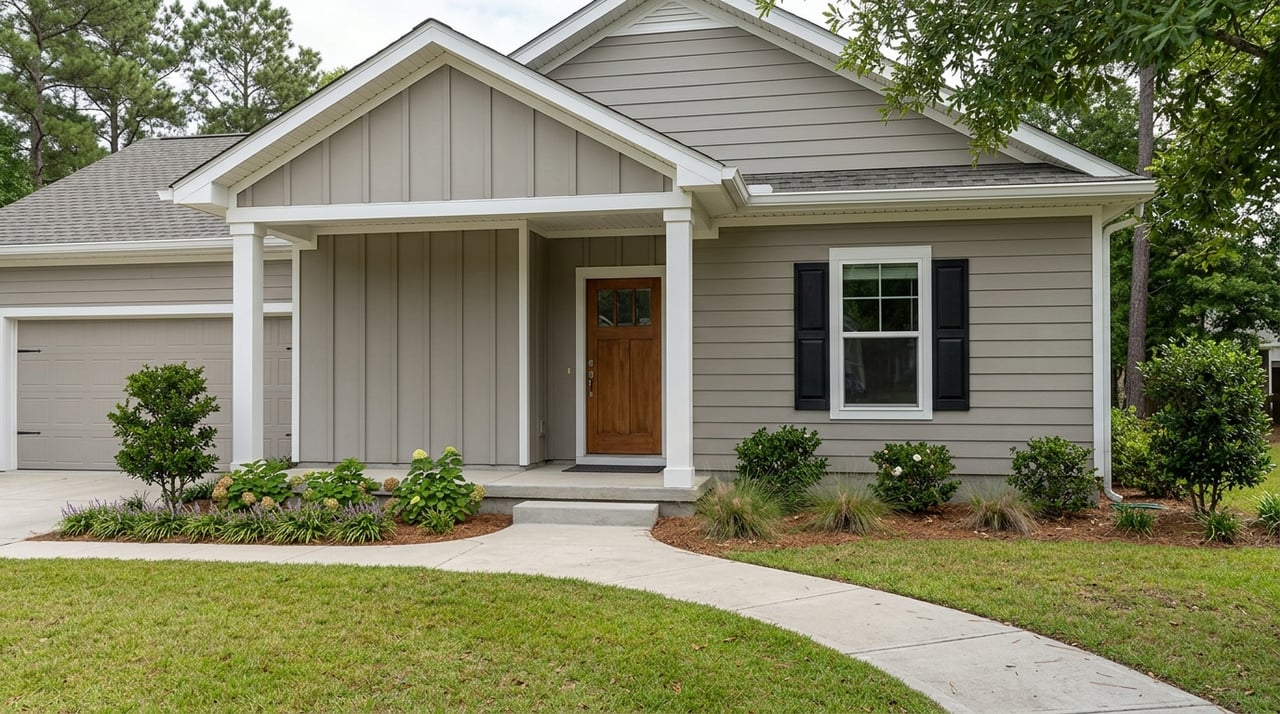
Current listing examples point toward newer detached homes, often in the 3- to 4-bedroom range with larger footprints and higher monthly rents. For investors, that usually means a higher acquisition cost and potentially higher carrying costs as well.
What Wake Forest may mean for you
Wake Forest may fit if you want:
- Higher nominal rent potential
- Newer single-family housing stock
- A suburb with higher household incomes and a more ownership-heavy housing mix
The caution here is simple. A higher rent does not automatically mean a better return if your purchase price, holding costs, and lease-up time also increase.
Clayton Investment Profile
Clayton offers the lowest entry price of the three markets covered here. Zillow’s Clayton market page shows an average home value of $359,415, down 1.7% year over year, with homes going pending in around 53 days.
Average asking rent is $1,889, with 269 available rentals, and Zillow labels Clayton’s rental market warm. That combination makes Clayton stand out for investors who want a more affordable path into a single-family rental.
The current rental examples in the research show a broader spread than Wake Forest, from smaller older homes at lower rents to newer 4-bedroom homes near $2,000 per month. That range may create more flexibility depending on your budget and strategy.
What Clayton may mean for you
Clayton may appeal if you want:
- The lowest typical acquisition cost in this comparison
- Warm rental demand
- A wider affordability range across the local housing stock
For smaller investors, Clayton can be attractive because it may offer a more manageable purchase price while still supporting competitive rent levels.
Compare the Three Markets
Here is a simple side-by-side look at the current data from the research report:
| Market | Avg. Home Value | YoY Value Change | Avg. Asking Rent | Rental Market Temperature |
|---|---|---|---|---|
| Raleigh | $428,831 | -2.6% | $1,799 | Warm |
| Wake Forest | $504,332 | -1.9% | $2,100 | Cool |
| Clayton | $359,415 | -1.7% | $1,889 | Warm |
This comparison highlights a useful pattern:
- Raleigh offers a mid-range entry point with warm rental conditions.
- Wake Forest posts the highest rents, but also the highest values and cooler rental conditions.
- Clayton offers the lowest entry price with warm rental demand.
Focus on Cash Flow, Not Hype
Across all three submarkets, current value trends support a cautious approach. Zillow’s year-over-year figures show declines in average home values in Raleigh, Wake Forest, and Clayton, which means your underwriting should lean more on rental stability and less on fast appreciation.
That does not mean you should avoid these markets. It means you should build your numbers around realistic rent assumptions, financing terms, maintenance reserves, insurance costs, and vacancy planning.
It is also important to remember that asking rent is not the same as gross rent. The research report notes that Zillow uses asking rents, while Census uses median gross rent. Those figures can both be useful, but they should not be treated as interchangeable.
Local Due Diligence Matters
Single-family investing is never just about the purchase price. It is also about how the property functions once you own it.
Because Raleigh, Wake Forest, and Clayton are separate jurisdictions with different housing patterns, your due diligence should stay local. In Raleigh, for example, the city has adopted zoning reforms and ADU-related updates, and investors should also review details such as neighborhood requirements, parking rules, HOA covenants, pet restrictions, and lease limitations before closing.
This is where a local team can make a real difference. Knowing neighborhood-specific rent bands, carrying costs, and property quirks can help you avoid overpaying or overestimating lease potential.
How to Choose the Right Submarket
If you are trying to narrow your options, start with your priority.
If your goal is a lower entry price, Clayton stands out in this comparison. If your goal is higher nominal rent, Wake Forest leads, but you may need to be more careful on pricing and lease-up expectations. If you want a balance between city access, rental demand, and moderate entry price, Raleigh may be worth a close look.
A smart next step is to compare properties by the same standards in each area:
- Purchase price
- Estimated monthly rent
- Condition and likely maintenance needs
- HOA restrictions, if any
- Days to pending and rental market temperature
- Reserve planning for vacancy and repairs
That kind of side-by-side review often reveals more than broad market headlines.
If you are weighing a rental purchase in Raleigh, Wake Forest, or Clayton, working with a local team can help you compare neighborhoods, evaluate likely hold costs, and make a decision based on the numbers rather than guesswork. When you are ready to talk through your options, connect with Nook and Nest Realty Co..
FAQs
What makes single-family investing in Raleigh different from nearby suburbs?
- Raleigh has a lower average home value than Wake Forest, a lower average asking rent than Wake Forest, and warm rental conditions, while each suburb has its own pricing, ownership mix, and lease-up dynamics.
Is Wake Forest or Clayton more affordable for single-family investors?
- Clayton is more affordable based on current average home values in the research report, while Wake Forest has the highest average home value of the three markets.
Are Raleigh-area investors seeing strong appreciation right now?
- Current research supports a cautious view, since Zillow shows year-over-year average home value declines in Raleigh, Wake Forest, and Clayton.
How should you estimate rent for a single-family rental in Wake County?
- Use local asking rent data carefully, compare similar homes in the same submarket, and remember that asking rent and Census gross rent are different measurements.
What should you check before buying a rental home in Raleigh or nearby suburbs?
- Review zoning, HOA covenants, parking rules, pet policies, lease restrictions, property condition, and local rent expectations before you close.